
Fulfillment Changes the Commitment, Not Just the Shipment

Every New Channel Changes the Inventory Decision
Expansion looks like addition. It is not. Every new sales channel, fulfillment method, or market you add changes the inventory commitment behind every unit. The demand signal, the lead time, the margin, and the working capital required to support the demand all change. The products may be the same. The inventory decision is not.

the $10M Seat and the $30M Break
Every founder-led consumer brand builds one seat by accident. It doesn't appear on the org chart. But it does the single most consequential piece of work the company produces: it holds the buy across finance, commercial, sales, and operations. That seat is the founder. Somewhere between $10M and $30M, it breaks.

The Hire the Founder Wasn't Taught to Make
In consumer brands between ten and fifty million in revenue, one person is quietly holding the seat that should have been built years ago. The founder. Not because the founder chose to. Because at the scale the brand was built at, no one else could. The market taught founders to hire functional leadership, one function at a time. It never taught them that the buy is not a function. The buy is a reconciliation across functions, and the role that holds it is a different hire than any of the functional leads.

The Next 90 Days Shape Next Year. Most Brands Are Only Reading It.
The next 90 days shape next year. Most growth-stage brands are only reading the forecast, not shaping the buy, and the seat that could reconcile it isn't in the room.

The Merchandise Planner Is a Strategic Seat, Not an Execution Seat
In most consumer brands, strategy gets written at aggregate and executed at SKU. Merchandise planning is the only function that operates at the resolution where the commitment actually happens, which makes it the strategic seat most growth plans are missing. Placed downstream, it becomes execution. Placed upstream, it decides whether the plan is real.

When Inventory Capital Exposure Is Already Building Inside Your Business
Most brands do not discover their inventory problem in the warehouse. They discover it in a cash conversation, one or two quarters after the decision that caused it. Three signs tell you whether inventory capital exposure is already building inside the current book, before it surfaces.

The Number Was Right. That Was the Problem.
Finance can confirm your inventory value is accurate. Only a planner can tell you whether it is real, whether it will convert at the margin, timing, and speed the business is counting on.

AI Makes Bad Inventory Decisions Faster
AI will make inventory planning faster. It will not make a weak commitment better. For scaling brands, the danger is adding speed before adding discipline.

The Buy Everyone Agreed On
The most expensive inventory commitments are the confident ones no one challenged. Why the biggest buys deserve one hard question before the capital is gone.

Spent Before It Arrives
The Business the Buyer Sees
The buyer and the founder see two different businesses. The space between them is the upside.
The Forecast Was Right. The Cash Was Not.

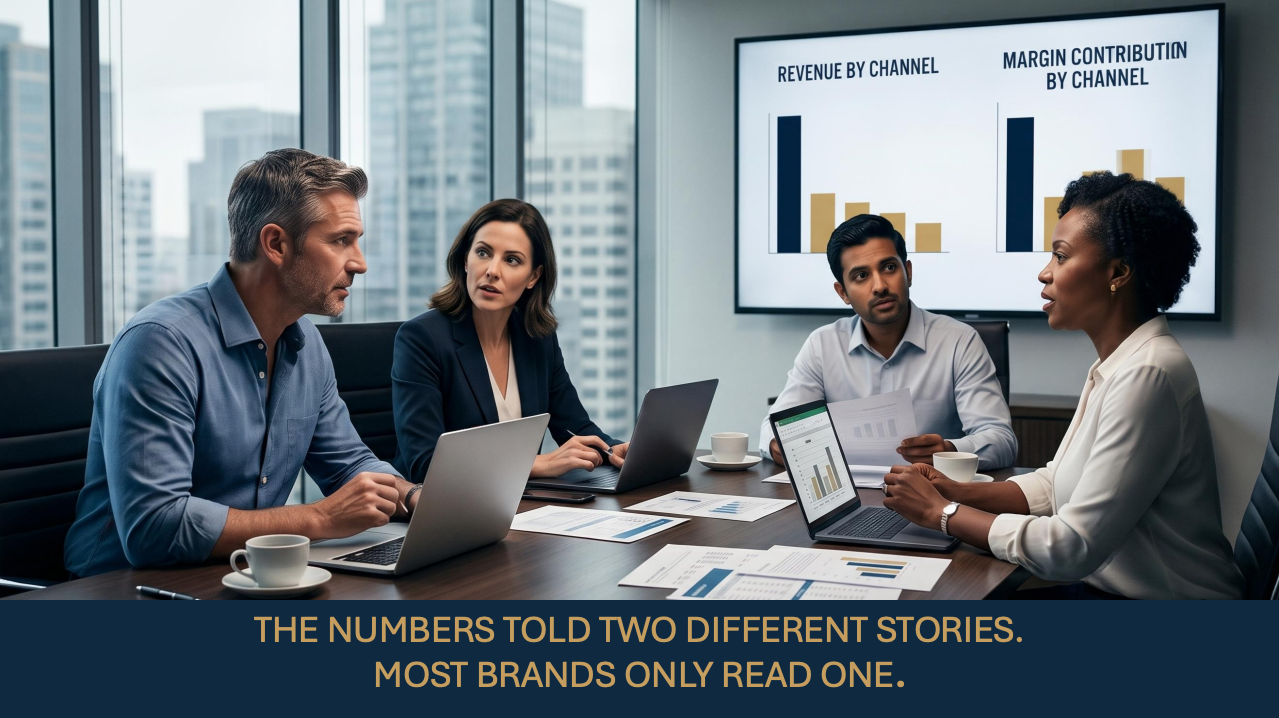
Every Channel Has a Different Economics. Most Brands Use One Number for All of Them.

We Launched Too Much. The Markdown Paid for It.
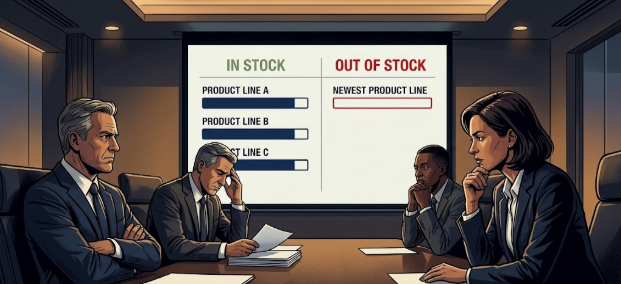
The New Product Sold Out. That Was Not the Win.